Can Muslims join Holi celebrations?
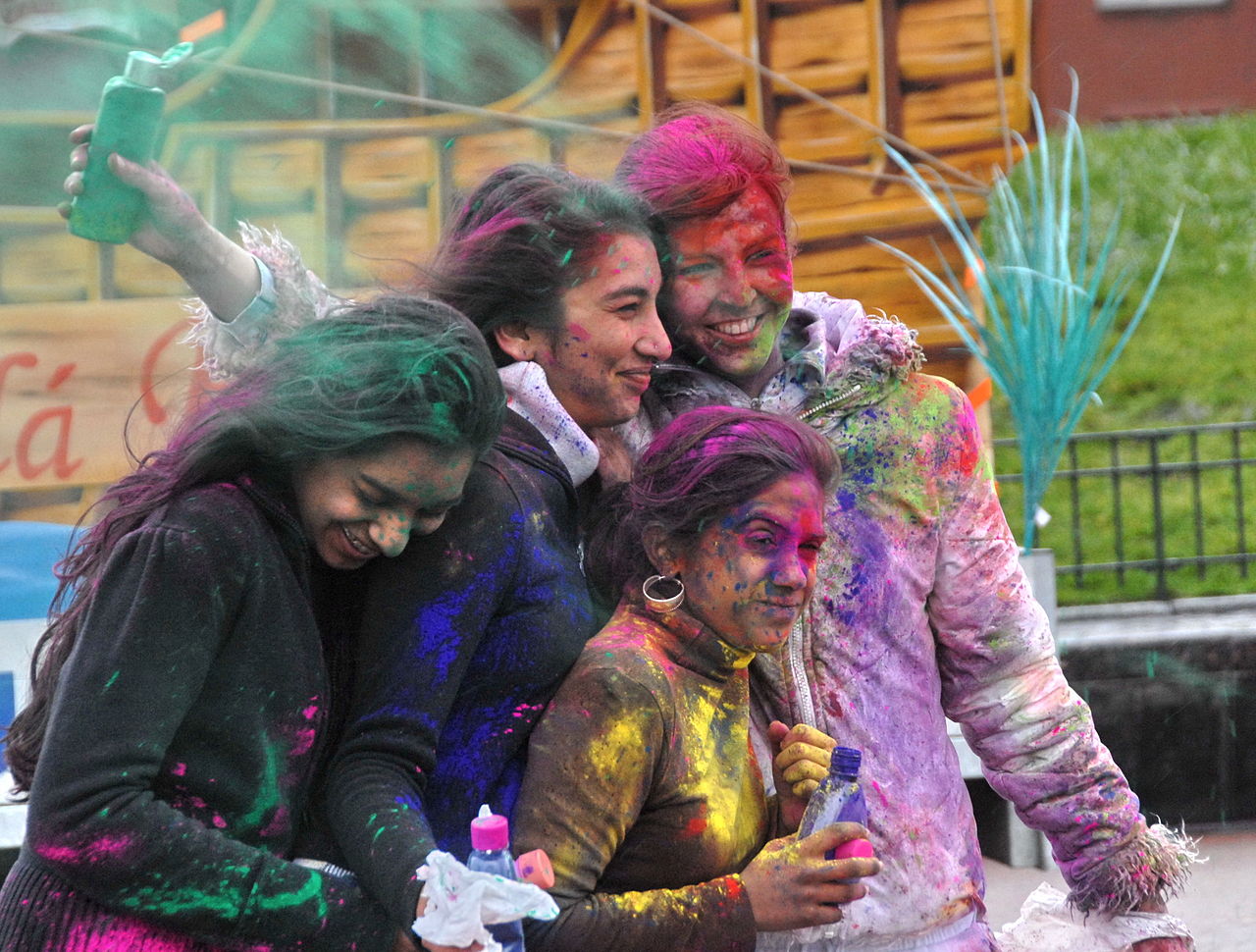
It depends, and scholars differ. Holi is a Hindu religious festival, so most scholars say Muslims shouldn't take part in its rituals, like the Holika bonfire puja or prayers to deities. Some contemporary scholars allow being present at a friend's or a campus color event as a guest, without joining worship. Everyone agrees to avoid bhang drinks and color play with the opposite gender.
What Holi is
Holi is the spring "festival of colors," celebrated by Hindus in March. It has religious stories behind it: the night before, people light a bonfire (Holika Dahan) to remember how the devotee Prahlad was saved from the fire through his devotion to Vishnu, often with puja around the flames. The next day, people throw colored powder and water, a custom linked to Krishna's playfulness with Radha. Around that there's music, sweets like gujiya, and a lot of laughter.
In the UK and the US, Holi also shows up as university events, "color runs" and city festivals, where many participants aren't Hindu at all.
Why many scholars say no
Scholars who advise against joining point out that Holi's colors and fire are tied to its religious meaning, even when people treat them as fun. The Prophet ﷺ said: "He who copies any people is one of them" (Sunan Abi Dawud 4031, graded hasan sahih by al-Albani). Many scholars apply this to other faiths' religious festivals and their distinctive customs.
The Quran also sets a clear boundary in worship:
The more lenient view
Some contemporary scholars, especially in multi-faith countries, distinguish between the religious rites and a purely social gathering. They allow attending a friend's Holi party or a campus event as a guest, enjoying food and company, as long as you stay away from puja, the bonfire ritual and anything addressed to deities. Even on this view, actively celebrating Holi as "your" festival isn't encouraged. Similar reasoning appears in Can I go to a Diwali party as a Muslim?
Things to avoid either way
- Bhang: a traditional Holi drink made with cannabis. The Prophet ﷺ said "every intoxicant is forbidden" (Sahih Muslim 2003).
- Color play with the opposite gender: smearing powder on faces involves touching, which Muslims avoid with non-mahrams.
- Religious marks and chants: tilak as a religious sign, or chanting to deities.
- Alcohol at parties, and prasad (food offered in worship).
The same thinking applies to other festivals with religious roots. See Can I still go to Halloween parties as a Muslim?
Staying a good friend
You can wish Hindu friends well, accept a box of sweets, and ask them about the festival with real curiosity. Friendship across faiths is something Islam values. See Can I keep my non-Muslim friends after becoming Muslim?
- Holi is a Hindu religious festival with rituals Muslims don't join.
- Most scholars say don't take part; some allow attending as a guest.
- Avoid bhang, opposite-gender color play and puja.
- Kind words and friendship stay fully open.
People also ask
Can Muslims eat prasad at a Hindu festival?
No, most scholars say Muslims shouldn't eat prasad, food offered to a Hindu deity, but ordinary festival food that wasn't offered is usually fine.
Read the full answer →How do I teach my kids about other religions as a Muslim?
How do I teach my kids about other religions as a Muslim? Start with shared prophets, be honest about differences, and respect others.
Read the full answer →Can Muslims celebrate Passover with Jewish family?
Many scholars let Muslims join a family Passover Seder as a guest, without reciting blessings or drinking the wine; stricter views say skip.
Read the full answer →Do Muslims have priests?
No, Muslims don't have priests. Islam has no clergy or sacraments; imams lead prayer and teach, and every Muslim speaks to Allah directly.
Read the full answer →Do Muslims celebrate Easter?
No, Muslims don't celebrate Easter as a religious holiday, since the Quran says Jesus wasn't crucified, but they honor him as a prophet.
Read the full answer →